
Ear piercings
Ear piercings are among the most popular forms of body jewellery and offer numerous styling options.
While some piercings are made through the tissue of the earlobe, others are located in the cartilage area and require special care.
On this page, you will find an overview of the different types of ear piercings, from classic lobe and high lobe piercings to helix and daith piercings.
What types of ear piercings are there?
Ear piercings can be placed in various locations on the ear. Some piercings even come in double and triple variations, where the same piercing is done two or three times next to each other.
Depending on their position on the ear, ear piercings differ not only visually, but also in terms of pain, healing time and the choice of suitable jewellery.
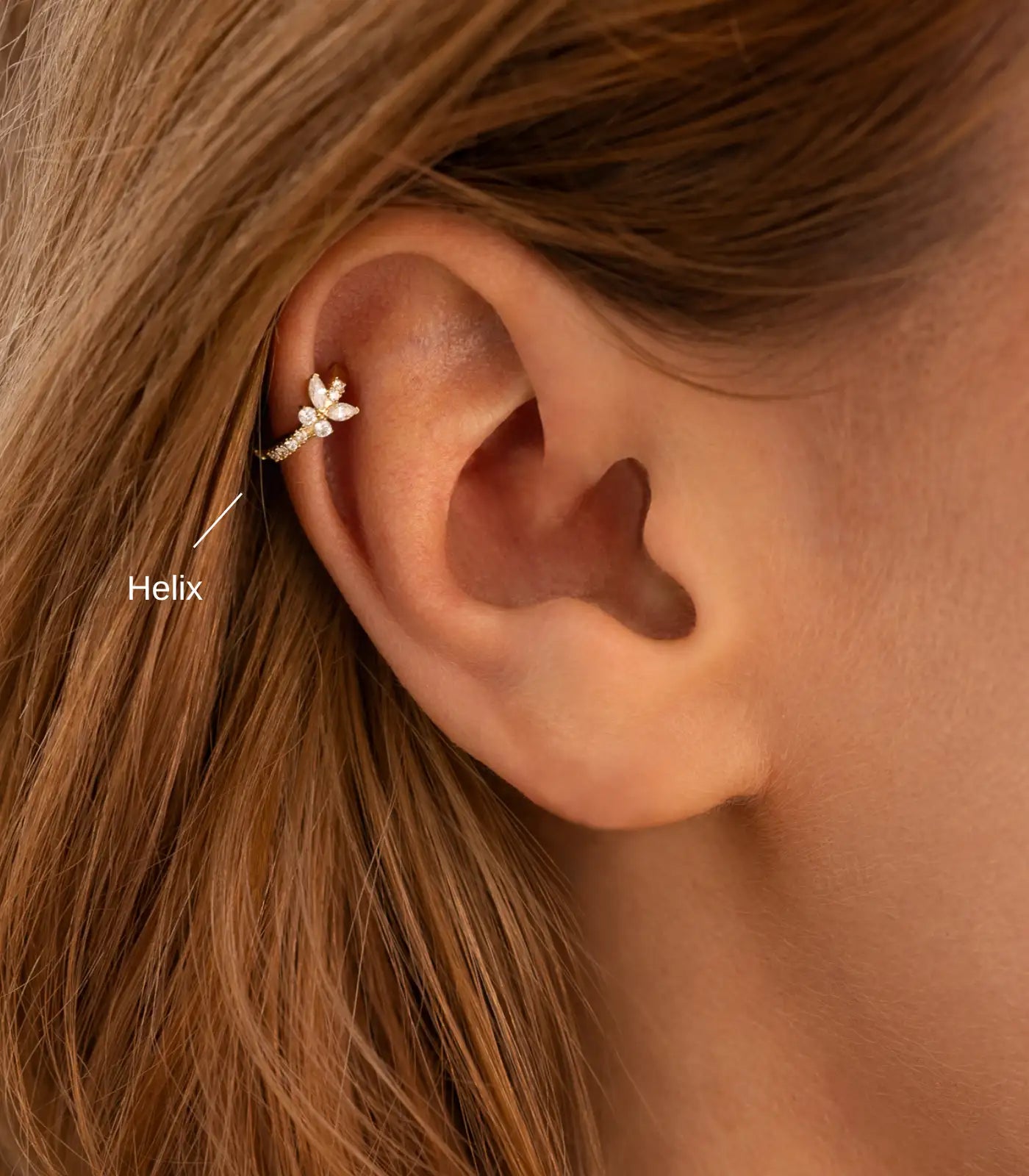
Helix Piercing
The helix piercing is one of the most popular ear piercings. It is located on the upper outer edge of the ear. The position may vary depending on anatomy.
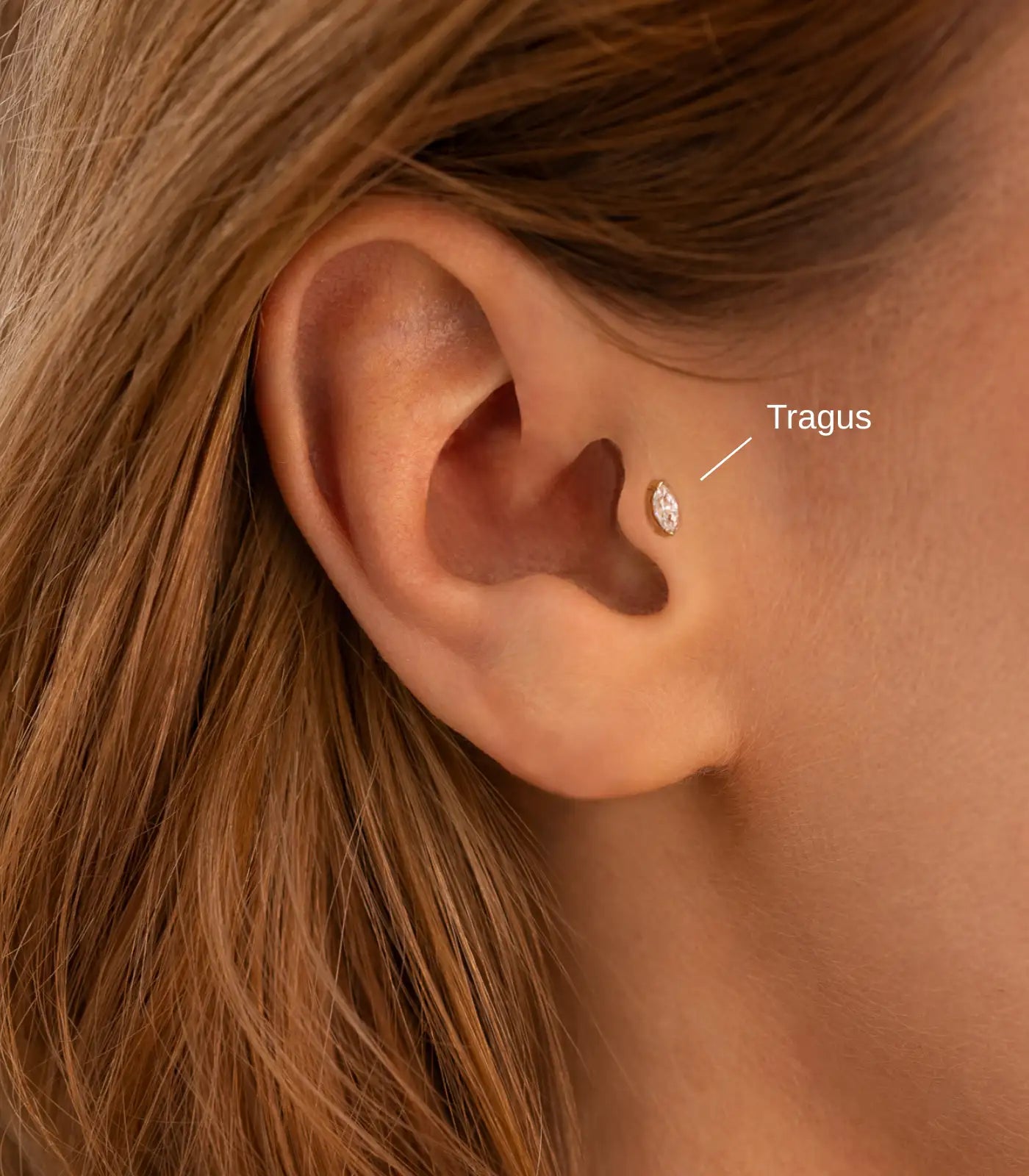
Tragus Piercing
The tragus piercing covers the outer ear canal. It is a small triangular piece of cartilage.
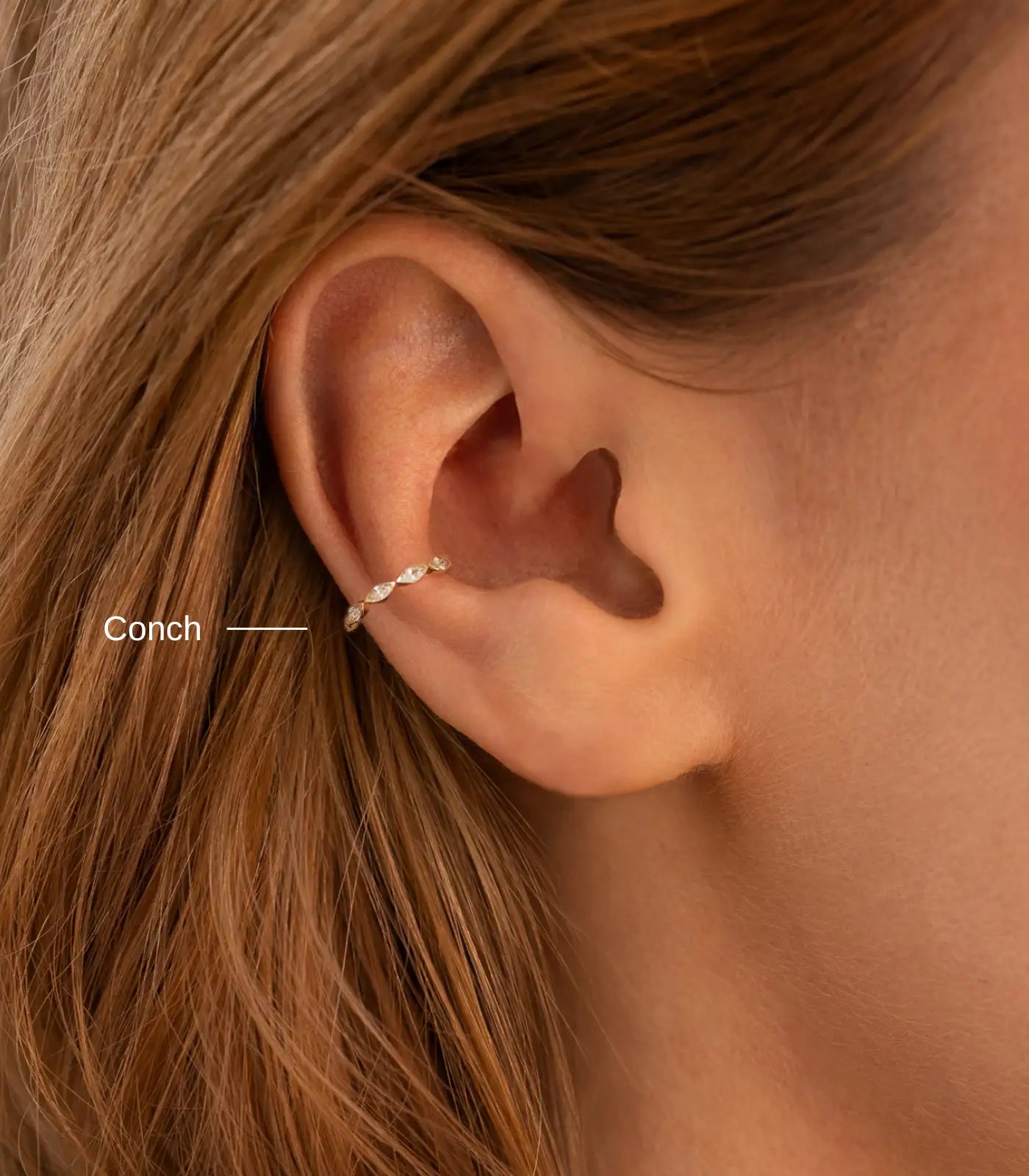
Conch Piercing
The conch piercing is placed in the ear concha and, depending on its placement, can be worn as an inner conch or outer conch piercing. It is one of the more striking ear piercings and offers a wide range of styling options.
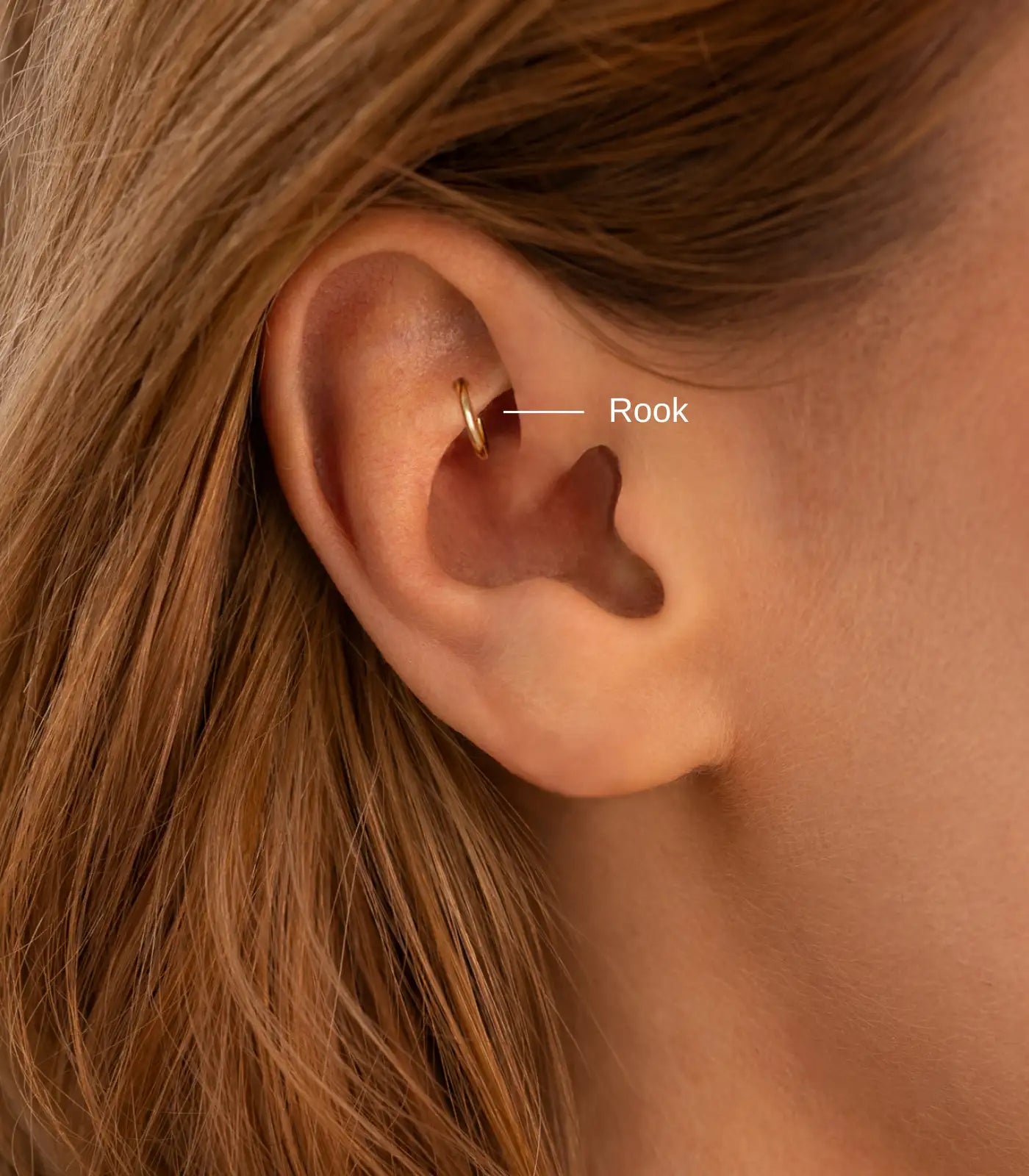
Rook Piercing
The Rook Piercing is a vertical piercing and is pierced through a small fold of cartilage in the ear.
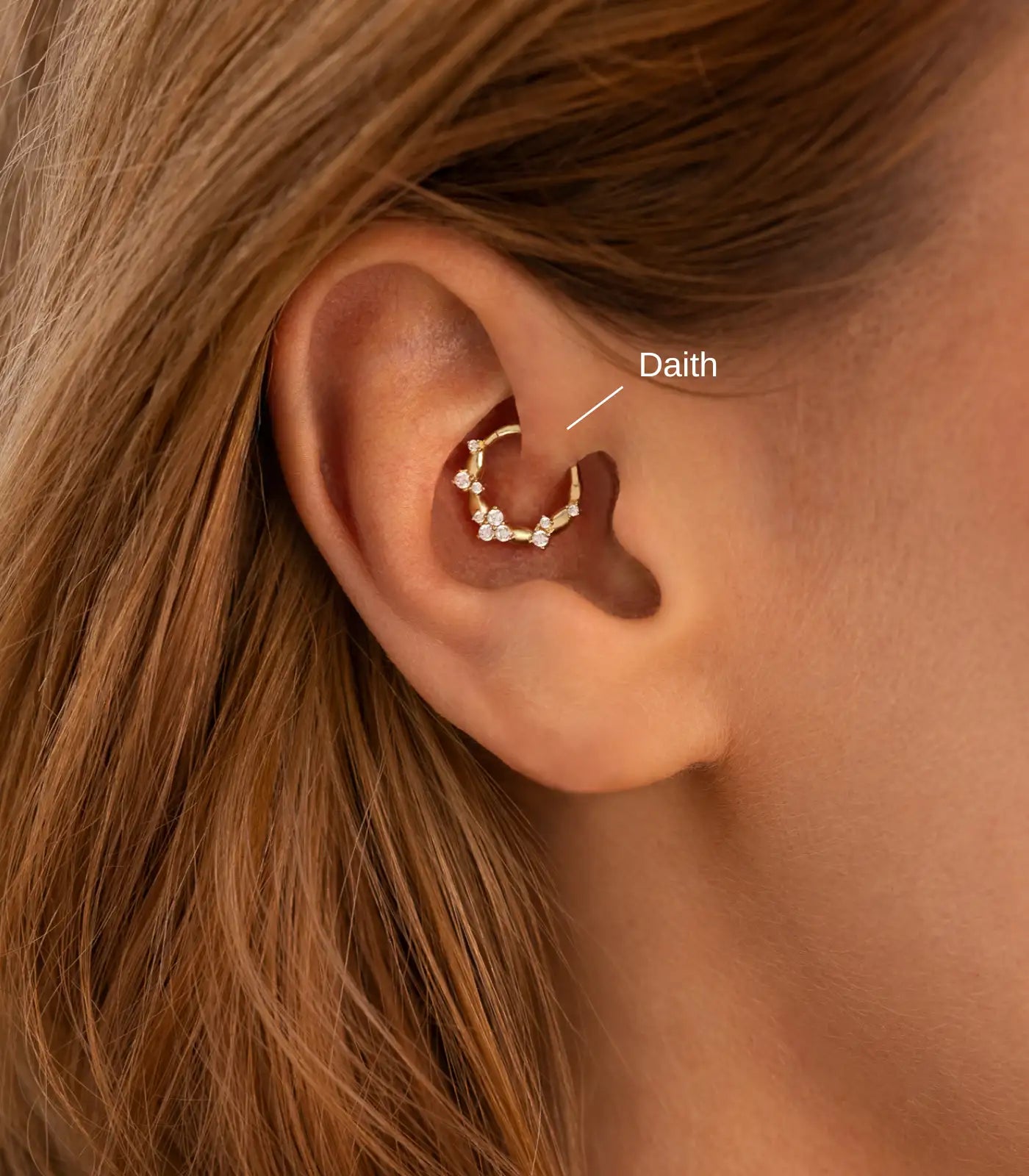
Daith Piercing
The Daith Piercing is placed through the inner cartilage fold of the ear, which is located directly above the ear canal.
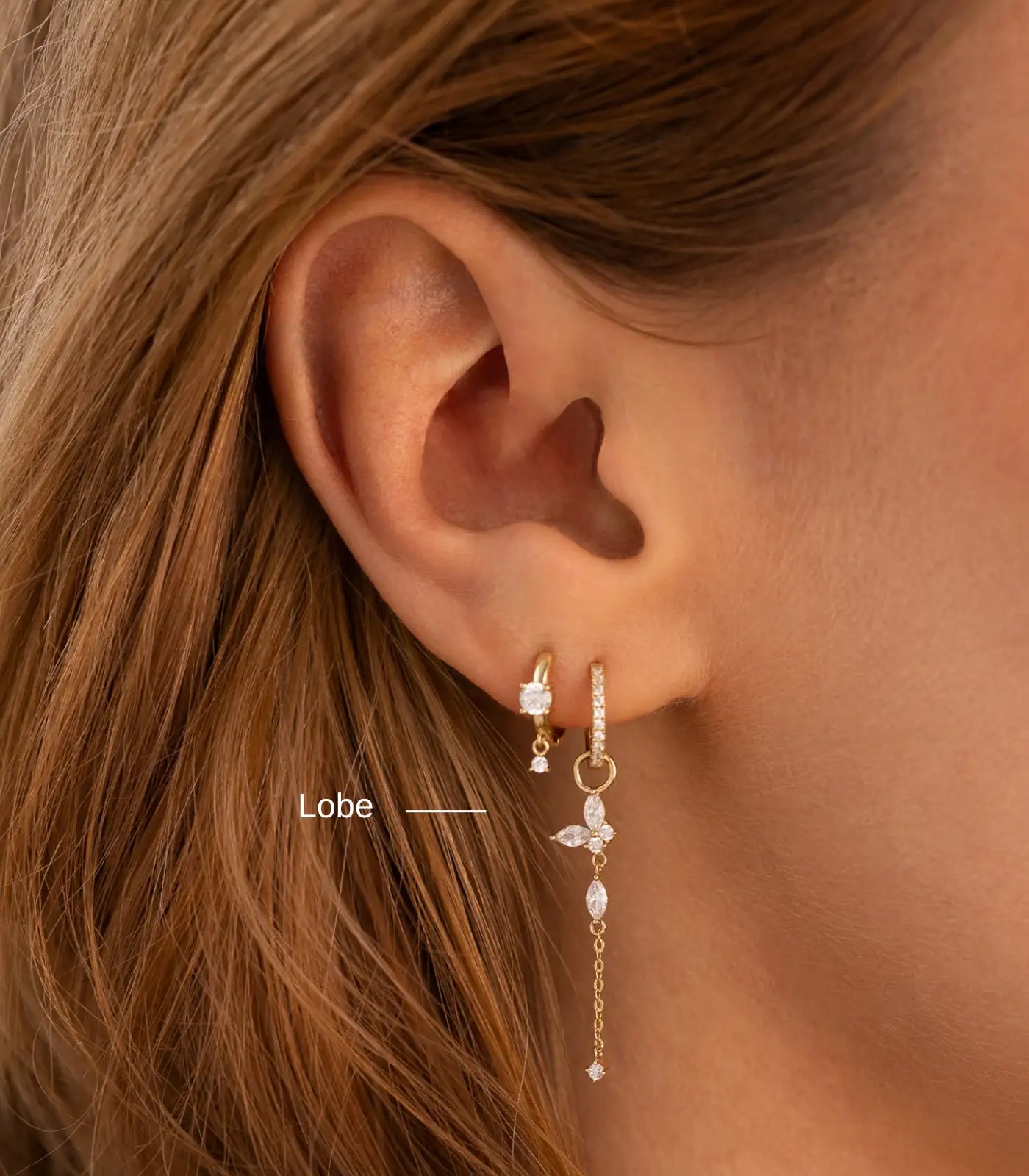
Lobe Piercing
The Lobe Piercing is the lowest ear piercing on the earlobe. It is the most popular and most frequently performed ear piercing.
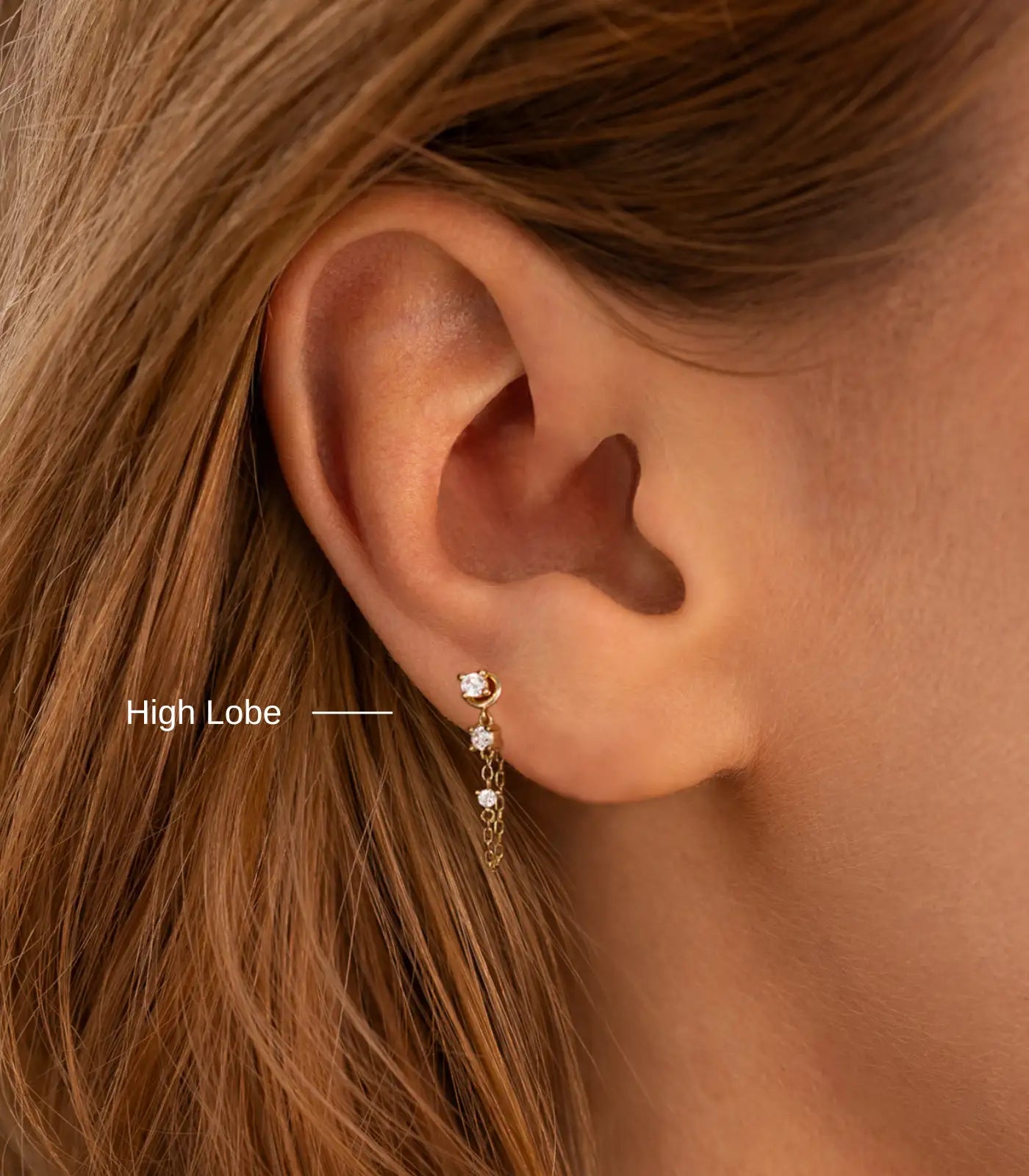
High Lobe Piercing
The High Lobe Piercing is also located on the earlobe. This is the second, third, or sometimes even the fourth ear piercing.
Healing, care, and pain associated with ear piercings
Healing, pain levels and care requirements can vary considerably depending on the type of ear piercing. While lobe and high lobe piercings pass through softer tissue, helix, tragus, conch, rook and daith piercings pass through cartilage and therefore take longer to heal. Cartilage piercings are also generally considered more painful than earlobe piercings.
Proper care is especially important because cartilage is more sensitive and heals more slowly. Regardless of the placement, every ear piercing is individual. Both the healing process and the pain level can vary from person to person.
Suitable jewellery for Ear Piercings
Now that you have learned about the different ear piercings, here is a selection of jewellery suited to each piercing type.
We use only high quality 14k yellow gold and 14k white gold for our jewellery, combined with carefully selected cubic zirconia stones. The materials are durable, waterproof and especially skin friendly, making the jewellery suitable for everyday wear.
Go directly to selected designs: the Marquise flat back stud, the Caelia helix stud in 14k gold, the gold clicker ring and the Fleur daith ring in 14k gold.
Piercing jewellery made of 14k solid gold:
Jewellery for earlobe piercings:
Jewellery for cartilage piercings:
What does the 3/2 rule state?
This rule refers to the 'Curated Ear' trend and states that there should be a distance of approximately 3 units between two ear piercings. This creates a harmonious overall look without appearing cluttered.
Which is the most painful ear piercing?
The rook, conch, and daith piercings are usually considered the most painful. These areas contain many nerve endings and the cartilage is relatively thick.
What is the maximum number of ear piercings that should be done at one time?
In principle, 3-4 ear piercings can be done per session, however, it is recommended to do a maximum of 1-2 cartilage piercings per session, as otherwise the healing process may be impaired.

