
Conch Piercing
Whether it's eye-catching conch rings or sparkling zirconia stud earrings, conch piercings can be styled individually and uniquely. Find out everything you need to know about conch piercings here.
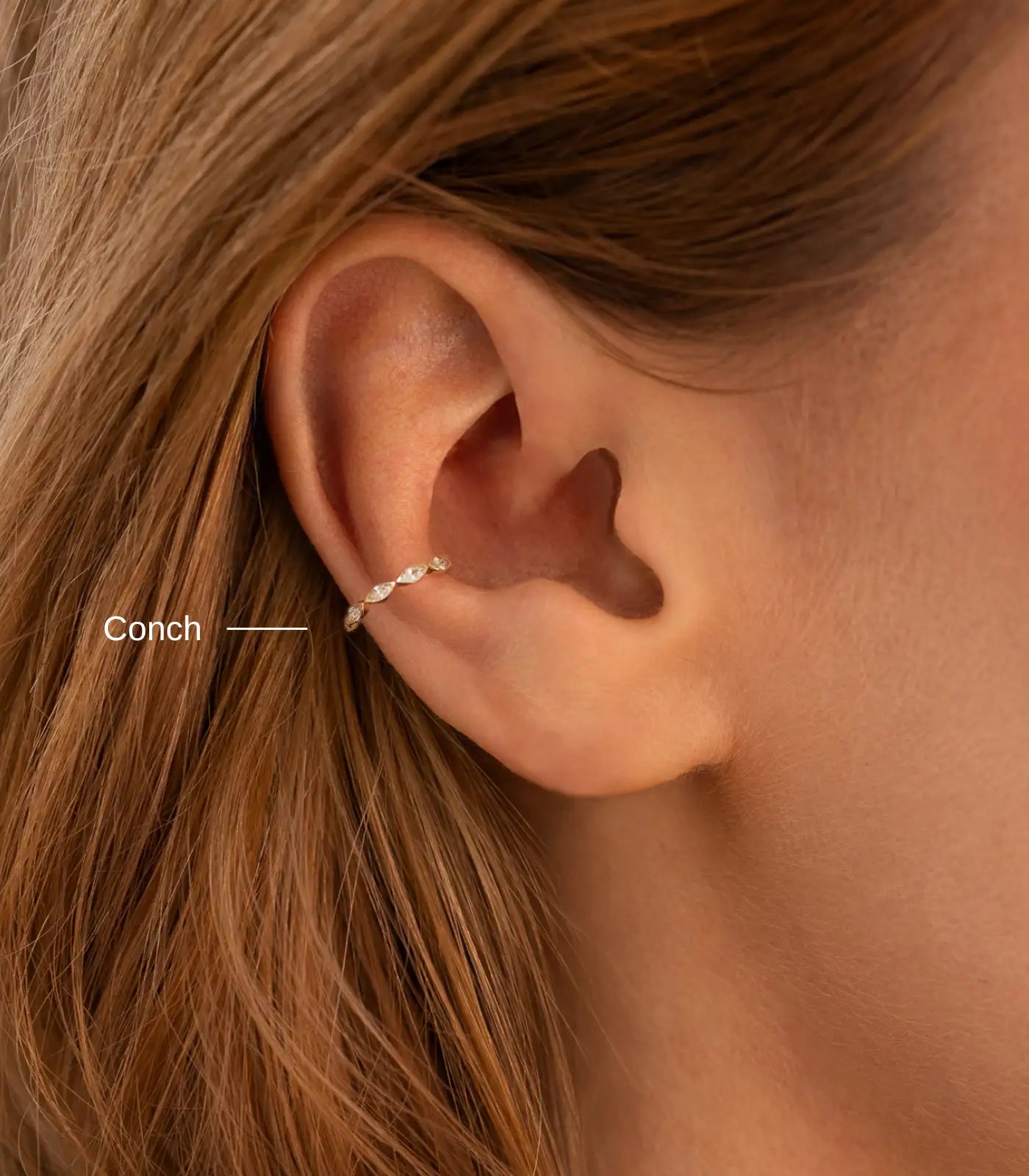
What is a Conch Piercing?
The name 'conch' comes from 'conch shell', which means 'sea snail'. As the name suggests, the conch piercing is located in the concha of the ear. It is pierced through the ear cartilage. In contrast to the helix piercing, the cartilage at the conch location is significantly thicker, which is why it takes longer to heal.
A distinction is made between the inner conch piercing and the outer conch piercing. The inner conch is located further inside the auricle, and the outer conch is located slightly further out.
- Outer conch: Since the outer conch is closer to the outer edge of the ear, it is particularly well suited for wearing a ring.
- Inner conch: The inner conch, on the other hand, is ideal for studs.
The exact location of the conch piercing depends on the individual shape of the ear and visual preferences.
How painful is a conch piercing?
Because the conch piercing is performed on a thick part of the ear cartilage, it is a rather painful piercing. The pain rating is approximately 7/10, but can vary depending on individual pain sensitivity.
Dermal Punch
Stretching the ear lobe is very painful, which is why the ‘dermal punch’ method is often used for conch piercing. This method does not use a typical piercing needle, but rather a type of cannula that punches out cartilage tissue. The advantage of this method is the shorter healing time. The disadvantage is that the hole does not close up again because the tissue has been cut out.

The ideal Conch Piercing Jewellery
Conch jewellery comes in many different designs. Choose from simple gold studs, sparkling earrings with cubic zirconia stones or eye catching conch rings. A conch piercing can be used to create unique styles. Here you can find out what to consider when choosing jewellery, which size to select and which materials are best suited.
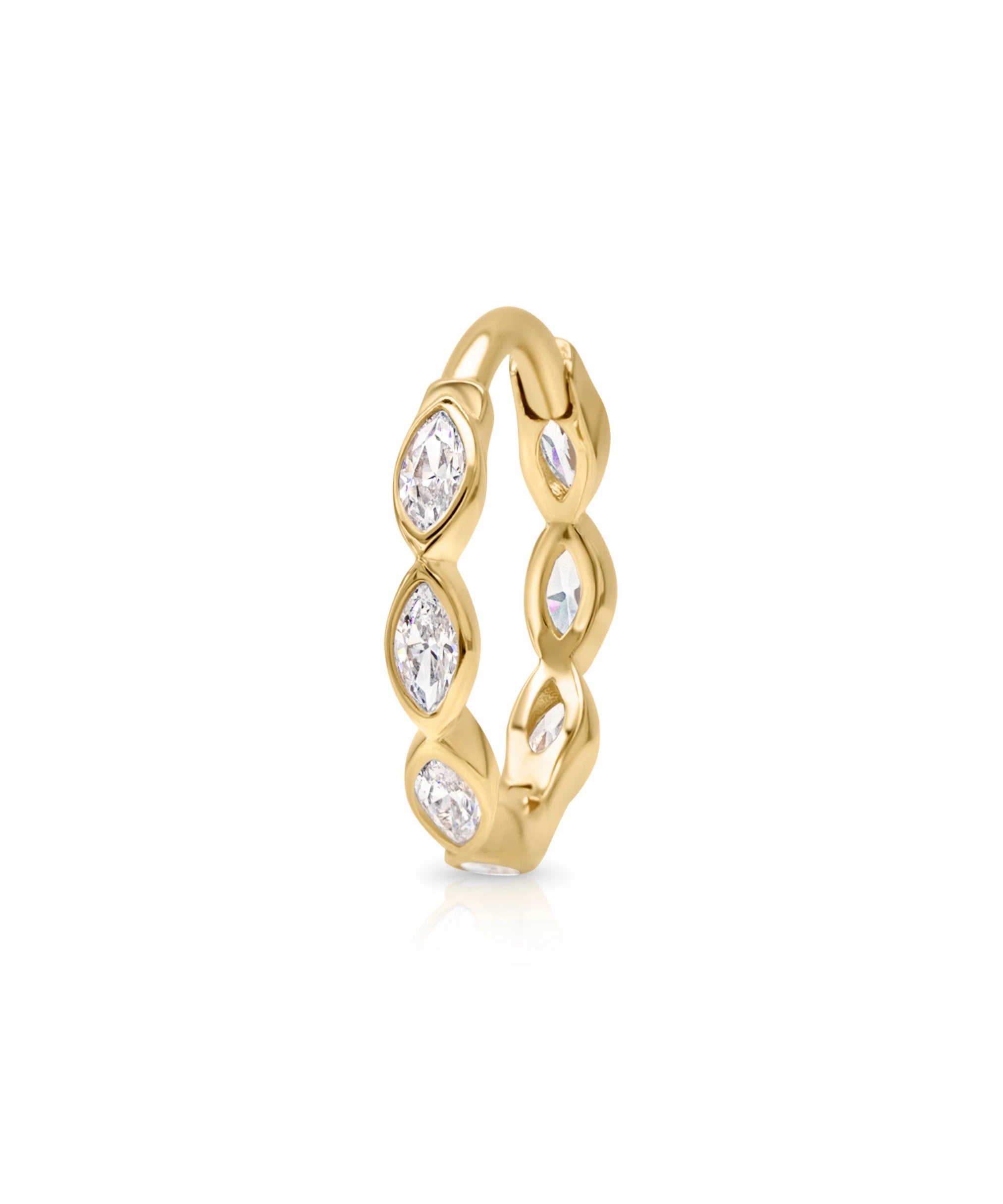
For a healed conch piercing, discover the Marquise conch piercing ring in white gold. If you prefer a stud, choose the Marquise flat back stud in white gold.
Finding the right size
The ear cartilage has a different thickness in each ear, and everyone's ears have a different shape, so it is important to choose the right length of ear studs for the inner conch and the right diameter for conch rings for the outer conch.
With piercings, the size of the piercing jewellery is usually adjusted after healing. This means that a longer stud is used for the piercing and a shorter one is used after healing. This is because the ear swells after piercing and is thicker due to the swelling.
For a conch piercing, the stud should be at least 6mm to 12mm long, depending on the thickness of the cartilage. The diameter of a conch ring is between 10mm and 18mm, depending on the anatomy of the ear. The thickness of the needle used to pierce cartilage is 1.2mm. It is therefore important that the material thickness of the earrings is also 1.2mm, otherwise the hole may close up.
Materials
For a freshly pierced piercing, the material must be hypoallergenic and sterile. This means it must be suitable for everyone without triggering allergic reactions. Furthermore, it must not transmit germs.
Titanium, gold, white gold, and stainless steel are hypoallergenic materials. In our experience, 14k gold and 14k white gold piercing jewellery is of the highest quality. It is durable and never needs to be removed.
Silver should never be worn on freshly pierced or inflamed piercings, as it negatively affects the healing process.
Recommended jewellery for conch piercings


How long does it take for a Conch Piercing to heal?
The healing time for a conch piercing is approximately 3 to 8 months. Proper piercing care is important for problem-free healing.
It is also recommended to only get piercings in spring, autumn or winter, as healing can be delayed by the heat in summer and contact with water.
How painful is a Conch Piercing?
The conch piercing is one of the most painful ear piercings because the cartilage in this area is relatively thick. The pain is often rated as a 7/10.
How long does it take for a Conch to heal?
It usually takes 3-8 months for a conch to heal.
What is the best way to heal a Conch Piercing?
During the healing phase, swimming pools, saunas, and tanning beds should be avoided. It is also important to avoid pressure and not to lie on the ear while sleeping. The wound should be disinfected several times a day and should not be touched.
How long should you avoid sleeping on a Conch Piercing?
It is recommended to avoid sleeping on your conch for at least 4-8 weeks. In our experience, however, it takes longer. If the area is subjected to too much pressure too soon, inflammation can occur, prolonging the healing time.
Our tip: A special piercing pillow with a hole for the ear.

